Tag: conscious beauty

  • The Best Refillable Makeup Brands to know in 2026: Our top picks

    The Best Refillable Makeup Brands to know in 2026: Our top picks


    Think about how much makeup packaging you’ve thrown away. Every empty lipstick bullet, every cracked powder compact, every foundation bottle, almost all of it plastic, almost all of it landfill. The beauty industry churns out billions of units of plastic packaging a year, and most of it is used once.

    Refillable makeup flips that. You buy the case once, then top it up with a refill when it runs out, keeping the bit that lasts and replacing only the bit that doesn’t. Less waste, less money over time, and increasingly, no compromise on quality. Here’s how it works and the brands leading the way.

    In This Guide:

    1. Why refillable makeup matters
    2. How refill systems actually work
    3. Our Sustainable Picks
    4. Is refillable actually cheaper?

    1. Why Refillable Makeup Matters


    Most makeup packaging is single-use plastic that’s difficult to recycle, because it mixes materials (plastic, metal, mirrors, magnets) that recycling plants can’t easily separate. So it’s landfilled or incinerated.

    Refillable systems cut that waste at the source. Instead of binning the whole product, you keep the durable outer case (sometimes for years) and replace just the pan or pod inside. One well-made compact can outlive dozens of disposable ones.

    2. How Refill Systems Actually Work


    There are three common formats, and they’re all simple.

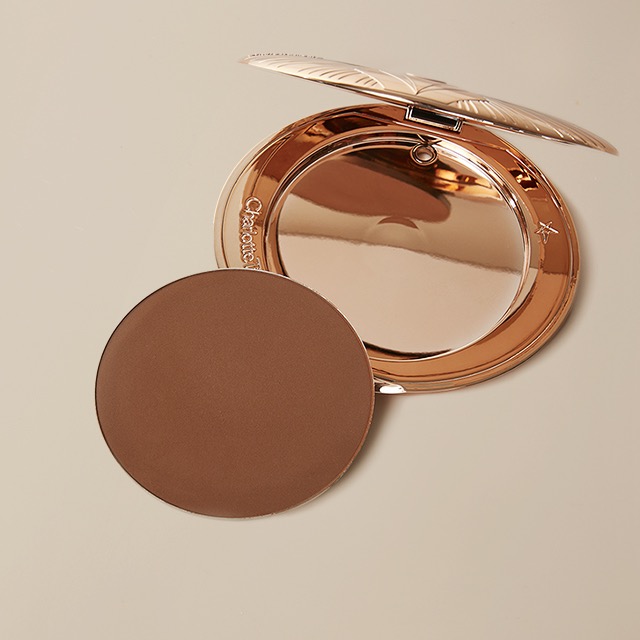
    • Magnetic pans: an empty palette or compact holds refill pans of eyeshadow, blush or powder that click in and out.
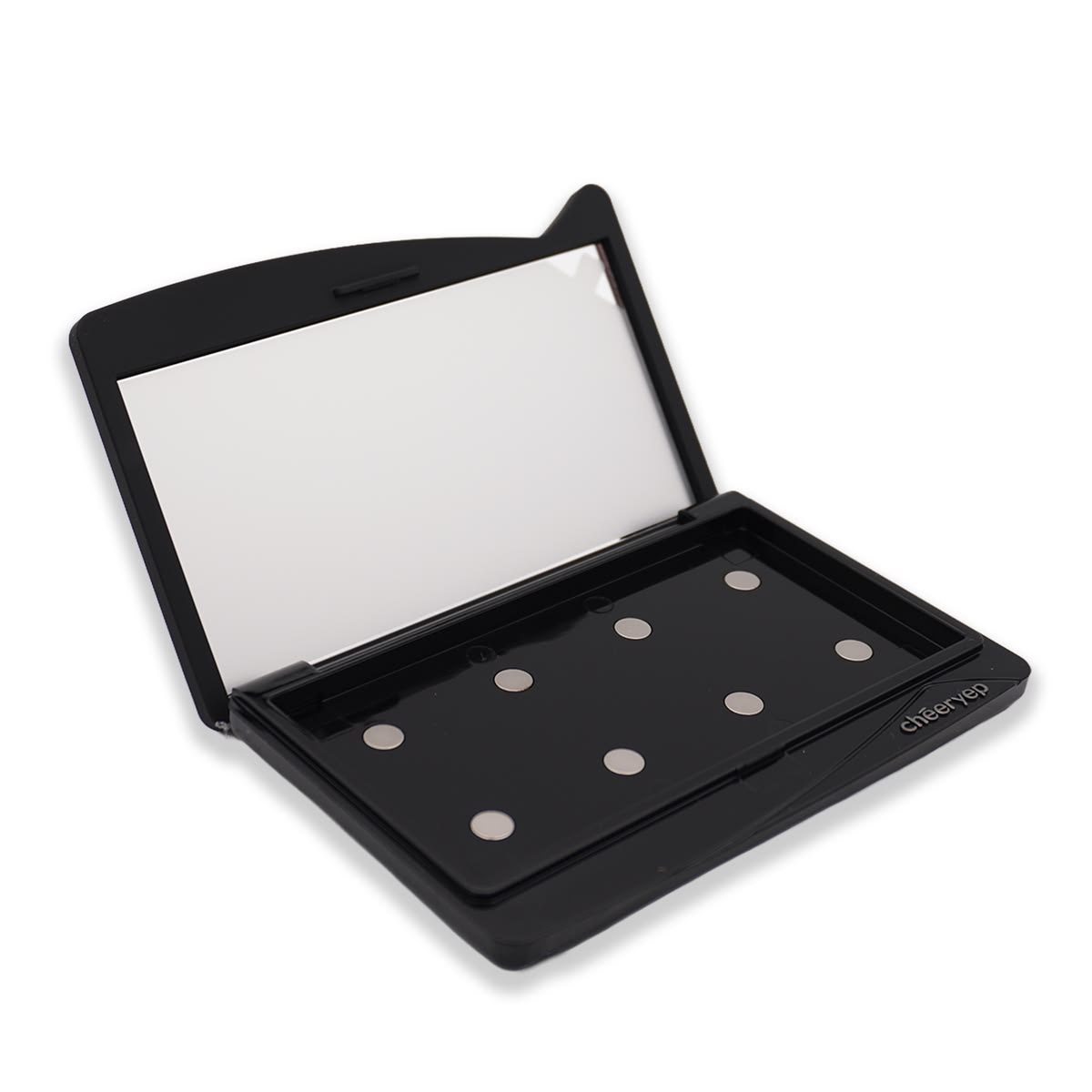
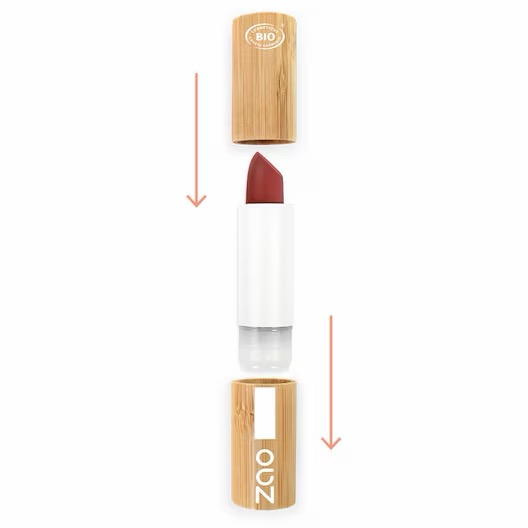
    • Pods and cartridges: lipsticks and foundations where the colour pod slots into a permanent case.
    • Screw or twist refills: the inner product unscrews and a replacement screws in.
    In every case the principle is the same: buy the housing once, then buy cheaper, lower-packaging refills forever. Most brands tell you exactly how to swap them on the product page.

    3. Our Sustainable Picks


    Four brands doing refillable properly, from one dedicated pioneer to the big names now catching up. Drop your tagged links into the markers below.

    The dedicated pioneer: Zao Makeup. Launched in 2012 as the world’s first fully refillable makeup brand, Zao houses everything (foundation, powder, eyeshadow, lipstick) in refillable bamboo cases. The whole range is vegan, cruelty-free and Ecocert-certified organic, and refills cost noticeably less than the original. If you want a brand built around refilling from the ground up, start here.

    Try: the Zao Refillable Concealer (buy the refillable case once, then just the refill).


    The refillable foundation: Lily Lolo Mineral Foundation SPF 15. A British mineral foundation (vegan, Leaping Bunny cruelty-free) that comes in a refillable pot, top it up with a fully recyclable refill sachet instead of buying a whole new product. Clean, short ingredient list and a genuine zero-fuss refill.

    Try: the Lily Lolo Mineral Foundation SPF 15 (then reorder the refill sachets).


    The refillable lipstick: Zao Bamboo Refillable Lipstick. Zao’s lipsticks sit in a refillable bamboo case, when you hit the end, you buy just the colour refill and keep the case. Vegan, Ecocert-certified organic and far less packaging than a standard bullet.

    Try: the Zao Bamboo Refillable Lipstick.


    The build-your-own palette: MAC Pro Palette. MAC’s refill system lets you buy an empty magnetic palette and fill it with individual eyeshadow, blush and powder pans, so you replace only the shade you’ve hit pan on, never the packaging. Brilliant for cutting waste while keeping a pro-level shade range.

    Try: the MAC Pro Palette plus your choice of MAC Eye Shadow refill pans.

    4. Is Refillable Actually Cheaper?


    Upfront, refillable can cost a little more, you’re paying for a durable case built to last. But the maths works in your favour fast. Refills strip out the expensive packaging, so each top-up is cheaper than buying the product new, sometimes substantially so.

    Buy one good compact and refill it three or four times, and you’ve spent less than you would on three or four disposable versions, with a fraction of the waste. The case is the investment; the refills are the saving.

    A Small Change That Sticks


    Refillable makeup isn’t a gimmick, it’s the direction the whole industry is heading, and it’s one of the easiest sustainable swaps to make because nothing about your routine actually changes. Same products, same finish, just a reusable case and a cheaper, lower-waste refill.

    Start with one product you repurchase often, a powder, a lipstick, an eyeshadow, and choose a refillable version next time it runs out. For more easy wins, explore the rest of our sustainable beauty edit.

    References

  • Leaping Bunny vs PETA Approved: Which Cruelty-Free Label Can You Trust?

    Leaping Bunny vs PETA Approved: Which Cruelty-Free Label Can You Trust?

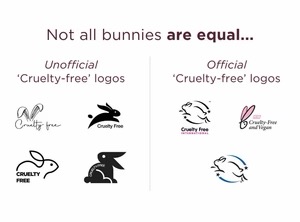
    You’ve spotted a little rabbit logo on your foundation and felt good about it. But here’s the uncomfortable truth: not all bunny logos mean the same thing, and some mean almost nothing at all. Anyone can print a rabbit on a box; only a handful of certifications actually verify it.

    The two you’ll see most are Leaping Bunny and PETA. Both certify cruelty-free beauty, but they work very differently, and knowing the difference is what lets you shop with real confidence. Here’s what each one actually guarantees.

    In This Guide:

    1. Cruelty-free vs vegan (a quick recap)
    2. Leaping Bunny: the gold standard
    3. PETA Approved: the bigger database
    4. So which should you trust?
    5. Our Sustainable Picks

    1. Cruelty-Free vs Vegan (A Quick Recap)

    These get muddled constantly. Cruelty-free means the product and its ingredients weren’t tested on animals. Vegan means it contains no animal-derived ingredients (like beeswax or carmine).

    They don’t guarantee each other: a cruelty-free product can still contain beeswax, and a vegan product could, in theory, be tested on animals. If both matter to you, you need to confirm both, which is where certifications come in.

    2. Leaping Bunny: The Gold Standard

    Leaping Bunny, run internationally by Cruelty Free International, is widely regarded as the most rigorous cruelty-free certification there is.

    To earn it, a brand must prove there’s no animal testing at any stage of production, from raw ingredients right through to the finished product, including by its suppliers. It has to put a supplier-monitoring system in place, agree to independent audits, and recommit every single year. That’s the key word: audited. The standard is verified, not just promised, which is why the Leaping Bunny list is more selective (and smaller) than others. The one gap: Leaping Bunny certifies cruelty-free only, not vegan.

    3. PETA Approved: The Bigger Database

    PETA’s programme (its “Global Animal Test-Free” and Beauty Without Bunnies logos) is the other big name, and it works on a different basis. Brands sign a written pledge that they and their suppliers don’t test on animals.

    That makes the process lighter-touch, with less documentation and, crucially, no independent audits to verify compliance, so it relies more on trust. The upside is a much larger database and a genuinely useful free app for checking brands on the go. PETA also offers a combined cruelty-free-and-vegan tier, which Leaping Bunny doesn’t. One nuance worth knowing: PETA has kept some brands certified while they sell in mainland China under its specific conditions, which not everyone is comfortable with.

    4. So Which Should You Trust?

    Both are legitimate, and a brand carrying either logo is a far better bet than one with a random, uncertified rabbit on the box. If you want the strongest possible guarantee, Leaping Bunny’s independent audits make it the more watertight choice. If you want breadth, or a quick cruelty-free and vegan check, PETA’s database is hugely handy.

    Two practical rules. First, ignore unbranded bunny logos, only a recognised certification means anything. Second, if ethics run deep for you, check the parent company too: a small certified brand can sit under a corporate group that still tests elsewhere.

    5. Our Sustainable Picks

    Brands that put their certifications where their marketing is, all shoppable on Amazon UK. Drop your tagged links into the markers below.

    INIKA Organic is the overachiever, Leaping Bunny approved, PETA cruelty-free and Certified Vegan by The Vegan Society, plus COSMOS organic. If you want every box ticked, start here. 

    Try: the INIKA Organic Baked Mineral Foundation.

    e.l.f. Cosmetics is Leaping Bunny certified and 100% vegan, at high-street prices, the easiest way to shop certified without spending a fortune. 

    Try: the cult e.l.f. Power Grip Primer.

    Barry M, a British staple, is cruelty-free and now fully vegan across its range, affordable and easy to find. 

    Try: the Barry M Flawless Original Primer.

    Zao Makeup is registered with The Vegan Society and certified cruelty-free, with the bonus of refillable bamboo packaging, ethics inside and out. 

    Try: the Zao Refillable Bamboo Mascara.

    Read the Logo, Not the Marketing

    A bunny on the box is only as good as the certification behind it. Now you know the difference: Leaping Bunny audits and verifies, PETA pledges and lists, and both beat an uncertified logo every time. Pair a cruelty-free certification with a vegan one and you’ve covered both bases.

    Use the labels as your shortcut, lean on the certified brands above, and explore the rest of our sustainable beauty edit to shop with a clear conscience.


    References

  • Clean beauty products: The makeup ingredients you should know about

    Clean beauty products: The makeup ingredients you should know about

    You’re standing in the aisle holding two foundations. One shouts “clean”, “non-toxic” and “free from parabens, sulfates and phthalates”. The other says nothing. Instinct says reach for the first, but here’s the uncomfortable truth: that label might mean very little, and the “scary” ingredients it’s avoiding may not be the ones worth worrying about.

    Clean beauty is one of the most powerful marketing ideas of the decade, and also one of the most misunderstood. This guide cuts through it: what “clean” actually means, the myth that trips everyone up, and the ingredients genuinely worth your attention, without the scare tactics.


    In This Guide:

    1. “Clean beauty” isn’t a regulated term
    2. The myth that trips everyone up
    3. What actually matters on a label
    4. Our Sustainable Picks
    5. How to read a label without the fear


    1. “Clean Beauty” Isn’t a Regulated Term


    Just like “reef-safe”, “clean” has no legal definition. No regulator sets the rules, so every brand and retailer writes its own. When Sephora launched its “Clean at Sephora” seal, it was the company’s own list of excluded ingredients, not an official standard (Dermatology Times).

    That’s why two “clean” products can have completely different ingredient lists. The badge tells you what a brand has decided to leave out, which is a marketing choice, not a guarantee of safety. So the label on the front isn’t where the answer lives.


    2. The Myth That Trips Everyone Up


    Here’s the big one: natural does not automatically mean safe, and synthetic does not mean harmful. Dermatologists have been saying this for years. A widely cited 2019 editorial in JAMA Dermatology was even titled “Natural Does Not Mean Safe”, warning that misinformation was driving up rates of allergic skin reactions (Harvard Health).

    The culprits are often the “natural” hero ingredients themselves. Botanical extracts and essential oils are among the leading causes of contact dermatitis, and in one study of people using natural botanical products, a notable share reported a skin reaction (Harvard Health).

    Take parabens, clean beauty’s favourite villain. There’s no solid evidence they cause the harms social media attributes to them, and they’re actually among the lowest-risk preservatives for allergies, so much so that a dermatology society named them a “non-allergen of the year” (Get the Gloss). When brands strip them out, they sometimes swap in preservatives that irritate more people. The fear, in other words, can backfire.


    3. What Actually Matters on a Label


    None of this means “anything goes”. It means shifting your attention from marketing buzzwords to the things that genuinely affect your skin.

    If your skin is reactive, the ingredient most worth watching is fragrance (listed as “parfum” or “fragrance”), one of the most common triggers of cosmetic allergy. Essential oils belong in the same bracket for sensitive types. Choosing fragrance-free is far more useful than chasing “paraben-free”.

    The reassuring part, especially if you shop in the UK: our safety net is already strong. Under UK and EU rules, every cosmetic must pass a documented safety assessment before it can be sold, and well over a thousand ingredients are outright banned, far more than in some other markets (London Dermatology Centre). The dose and the formulation matter more than any single scary-sounding name. As dermatologists put it, they look at the science, not the slogans.


    4. Our Sustainable Picks

    Three brands that do “clean” honestly, leading with transparency and short, sensible ingredient lists rather than fear. All on Amazon UK; drop your tagged links into the markers below.

    Best for full transparency:

    INIKA Organic. Certified organic (COSMOS), Vegan Society certified and Leaping Bunny approved, with ingredient lists it’s happy to stand behind. If you want claims that are independently backed rather than self-declared, start here. Try: the INIKA Organic Baked Mineral Foundation, a clean, buildable powder base.

    Best for sensitive skin:

    Lily Lolo. A British mineral makeup brand with genuinely minimal formulas, fragrance-free, paraben-free and free from synthetic dyes, which makes it a sensible choice for reactive skin. Most of the range is vegan, though a few shades contain carmine, so check if that matters to you (Lily Lolo). Try: the Lily Lolo Mineral Foundation SPF 15, a short-ingredient-list powder base (also available as a refill).

    Best everyday value:

    e.l.f. Cosmetics. 100% vegan, Leaping Bunny certified, openly lists its ingredients and keeps prices low, so shopping thoughtfully doesn’t have to be a splurge. The easy, no-drama option. Try: the cult e.l.f. Power Grip Primer.


    5. How to Read a Label Without the Fear

    You don’t need a chemistry degree, just a calmer system. Ignore the “free-from” claims on the front and turn to the ingredients list (the INCI list) on the back. If a brand hides its full ingredients, that’s a bigger red flag than any single component.

    Patch test anything new on your inner arm for a couple of days, particularly if you have sensitive skin, and remember that a reaction can come from a “natural” ingredient just as easily as a synthetic one. If you want to understand what you’re reading, a free tool like INCIDecoder explains each ingredient in plain English. Above all, judge a product by how your skin responds, not by how virtuous the packaging sounds.


    Shop the Formula, Not the Fear


    Clean beauty isn’t a scam, but it isn’t a safety guarantee either. The smartest approach is to drop the chemophobia, lean on the UK’s strong regulation, watch genuine triggers like fragrance if your skin is reactive, and choose brands that are transparent about what’s actually in the bottle.

    Do that and you’ll shop with confidence instead of anxiety. Start with one of our transparent picks above, and when you want to go further, our guide to cruelty-free certifications shows you exactly which labels are worth trusting, and which are just clever wording.


    References